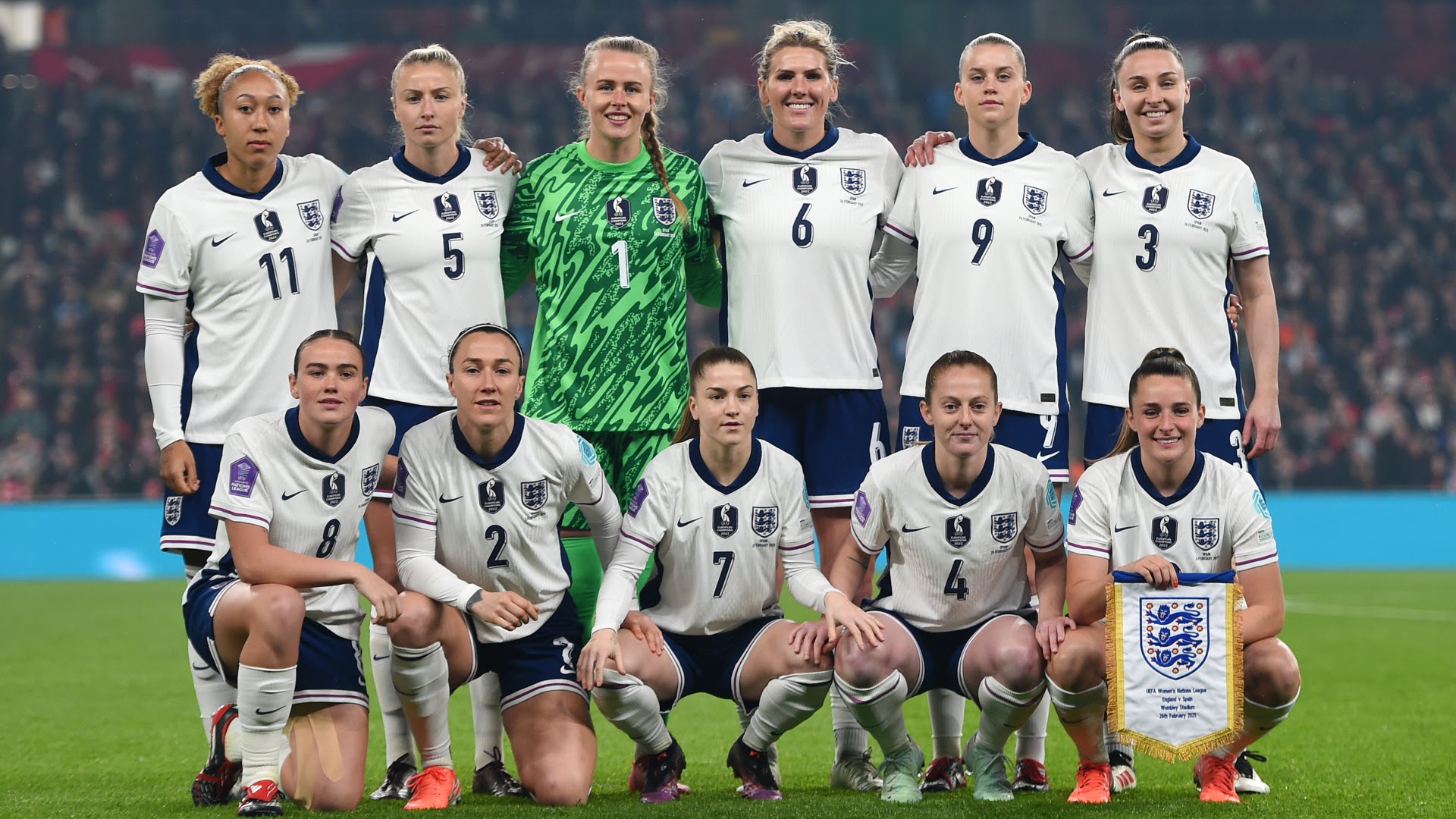
Ranked among the top five women's international teams worldwide.


Now that the first international break of 2025 has ended, it's time to rank the best nations in women's football.

We are at the start of a critical few years in world football, with the 2025 Women's Euro set to take place in Switzerland this summer and the 2027 World Cup in Brazil right around the corner. As the rest of the world catches up, the top teams are finding it increasingly difficult to maintain their status as elites.

This international break has been telling, with the US, Japan, and Australia competing in the SheBelieves Cup. Across the Atlantic, the European nations have begun their 2025 Nations League campaigns.

5. Sweden


Several teams deserve to be in the top five, including Canada, the 2021 Olympic champions, and Brazil, the silver medalists from last year. However, it is Sweden's consistency in major tournaments that keeps them here. Euro semi-finalists in 2022 and World Cup semi-finalists in 2023, they were beaten by the eventual champions on both occasions. That said, their last major honors was secured back in 1984, so to move further up this list, they must clinch one of world football's biggest prizes.

4. England


It's fair to say that England's record in the last two major tournaments keeps them on this list, but their recent performance has been disappointing. Being European champions and reaching the World Cup final do not happen by chance, and Sarina Wiegman is the mastermind behind this golden period. That being said, the Lionesses have a lot to prove this summer if they want to reclaim their status as Europe's best team and move up the rankings. The calibre of England's players speaks for itself, but there is still work to be done to ensure that everything works when it counts the most.

3. Germany


No team has come close to equaling Germany's record in the European Championship. Norway is the next best nation, with two trophies. While much of their respect and admiration stems from their past success, they are still demonstrating their ability to compete at the highest level. Their Euro 2022 performance was outstanding, and they narrowly missed out on a record ninth title against England at Wembley.

Their performance at the World Cup a year later was disappointing, but their recent form suggests they are back on track. Germany's victory over England at the end of last year, albeit in a friendly, marked Christian Wuck's debut as national team coach. Although their form has been inconsistent under the new coach during this transitional period, they cannot be counted out for another European title this summer.

2. Spain.


Although the current world champions have suffered a slight drop in form since their early exit from the Olympics last year, there is no denying the quality in their ranks. Aitana Bonmati remains the best player in the world, and they are unquestionably the favourites to lift the Euro trophy in July. Spain's national teams dominate both men's and women's football, and this trend is unlikely to change anytime soon.

1. United States


It's not surprising. The world's best team right now is the Olympic champions. Emma Hayes faced a significant challenge when she took over the USWNT last summer, following their disappointing performance at the 2023 World Cup, but she has quickly restored their status as the best. Whether it's the promising young talents rising through the ranks or the current generation of superstars, the USWNT is a team to be feared. Attention is slowly shifting to the 2027 World Cup, and Hayes will undoubtedly be determined to lead them to victory once more.

Comments

Popular posts from this blog

MLS Investigates Inter Miami Over Casemiro Tampering Allegations: What You Need to Know.

MLS opening an investigation into Inter Miami over Casemiro tampering allegations is as much about how the league works as it is about one transfer. At the centre of the story are three moving parts: Casemiro’s status as a free agent, Inter Miami’s ambition and the MLS rules on “discovery rights” and tampering that most European fans barely know exist. Put together, they explain why a seemingly straightforward signing has suddenly become a regulatory flashpoint. The headline is simple enough: MLS has confirmed it is reviewing a tampering allegation against Inter Miami in relation to their move for Casemiro, shortly after the club announced his signing. The allegation originates from LA Galaxy, who had previously registered Casemiro on their “Discovery List”, giving them priority within MLS to negotiate with him. In their view, Inter Miami contacted the player and progressed a deal before formally acquiring those rights, which is where the accusation of tampering comes in. MLS has said ...

John Stones: The Premier League Free Agent with Chelsea and Arsenal in Hot Pursuit.

John Stones hitting the market as a Premier League free agent is the kind of twist that instantly rewires the summer agenda for clubs like Chelsea and Arsenal. After a decade of winning at Manchester City and a strong showing with England, he’s not moving as a faded name chasing one last payday; he’s moving as a proven, system-friendly defender whose profile still matches what elite coaches want from a modern centre-back. That’s why both London clubs are not just interested, but firmly in the chase. Stones brings something very specific to the table: the hybrid centre-back. He’s comfortable defending in a high line, stepping into midfield zones, and acting as a deep playmaker in possession. That alone explains why his availability lights up the radar at Chelsea. With a new project focused on structured build-up and aggressive pressing, they need defenders who can do more than just head clearances. Stones has spent years in a system where centre-backs are effectively extra midfielders i...

Why Newcastle United is Holding Firm on Bruno Guimaraes: The Importance of Direct Offers.

Newcastle United’s hard line on Bruno Guimaraes is not just stubbornness; it’s a deliberate stance built on power, strategy, and respect — and that’s exactly why they care so much about how bids arrive, not just how much money is on the table. In the middle of a noisy market, they’re drawing a clear line: if you want their captain, you come directly, formally, and at full value, or you don’t come at all. Bruno isn’t just another midfielder at Newcastle; he’s the emotional and tactical centre of their project. Since arriving, he has become their reference point in possession, their heartbeat in tough games, and their visible symbol of ambition. Everything about the club’s recent identity shift — from relegation scrap side to European contender — has his fingerprints on it. He knits together transitions, drives the ball through midfield, and adds the kind of personality that lifts a stadium when things are flat. When a player holds that kind of role, you don’t treat his future as an open...

The Rise of Yan Diomandé: What Makes Him the Next Big Thing in Football.

Yan Diomandé looks like the kind of footballer who makes the game feel slightly ahead of schedule. His rise has been so fast, so visually striking, and so full of “how on earth did this happen so quickly?” moments that he already feels like a player the sport has decided to circle before fully understanding him. What makes him the next big thing is not just talent in isolation, but the rare combination of dribbling volume, end product, fearless mentality, and a career path that has hardened him in ways many elite prospects never experience. The first thing that jumps out about Diomandé is how unusual his journey has been. He was born in Ivory Coast, developed further in Florida, spent time in Spain, and then exploded at RB Leipzig in Germany. That path matters because it means he did not come through a single polished academy system where everything was predictable and perfectly scripted. He has had to adapt to new cultures, new tactical demands, new levels of pressure, and new expecta...

Post-Match Brawl: Analyzing the Chaos After Spain's Victory Over Argentina.

Spain’s victory over Argentina should have been remembered first as a tactical triumph and a historic final, but the post-match brawl quickly shifted the conversation from football to control, emotion, and discipline. What happened after the whistle was not just a “dust-up”; it was the visible collapse of tension that had been building through a high-stakes match, and it exposed how fragile the line is between competitive fire and outright disorder. The first thing to understand is that brawls after major finals rarely come from nowhere. They are usually the product of accumulated frustration, perceived disrespect, emotional fatigue, and the pressure of knowing that one result has just ended a dream. In this case, Spain had won a final that Argentina believed they could claim, and that alone creates a volatile emotional climate. When a game ends with disappointment for one side and ecstasy for the other, the body language in those first few seconds can matter as much as anything that h...