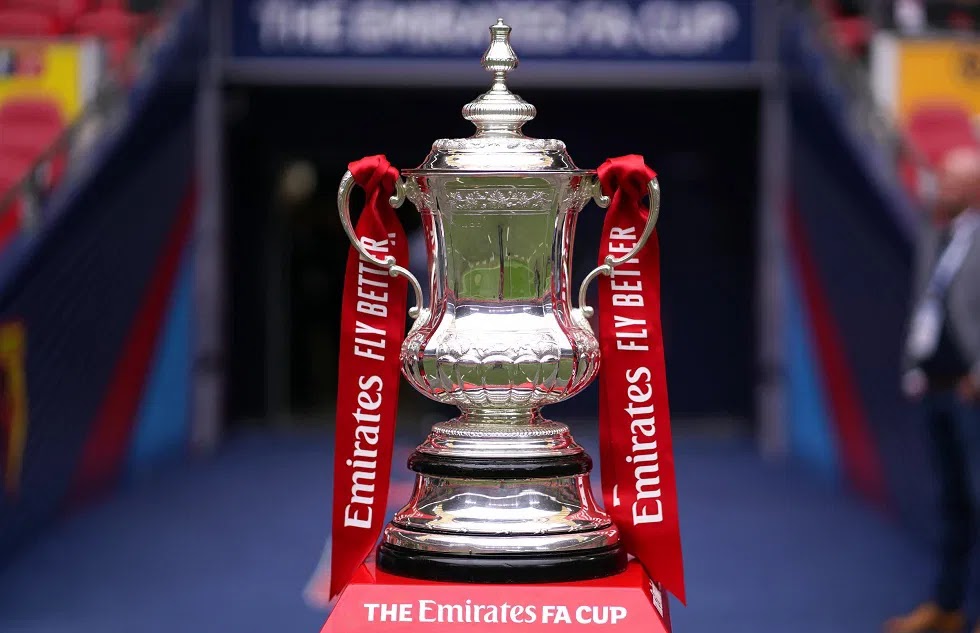
Brighton are far from the only club dealing with such conflicting emotions this weekend, as the bulk of those remaining in the FA Cup are well aware that this isn't just any game. It's a historic, and perhaps unique, chance.
There will be no arguments over the competition's meaning this weekend. The majority of the most frequent winners, including the five most successful clubs over the last 34 years and nine of the last ten champions, are no longer in the competition. It couldn't have meant more to those who remained.
Half of the eight have never won a major trophy. They include Bournemouth, Brighton, Crystal Palace, and Fulham.
Preston North End, which has done the usual league and cup double, has not won a trophy since the 1938 FA Cup. There will be no concerns about bringing flags to Deepdale, where the mood is already fantastic.

Preston will host Aston Villa, who haven't won anything in 29 years, narrowly beating Nottingham Forest's 35-year wait. Even Manchester City, who reached the final a year ago and won it in 2023, is in the odd position of requiring the FA Cup to preserve their season.
FA Cup quarter-finalists and the years since their previous major prize
Manchester City – one
Aston Villa – 29
Nottingham Forest – 35
Preston North End – 86
AFC Bournemouth – Never
Crystal Palace – Never
Brighton and Hove Albion – Never
Fulham FC - Never
It is not a giveaway or an indication of bias to say that the other seven clubs would like to see Bournemouth beat City, if only to clear the way.

The existence of this millennium's most successful English team stands out in a more "democratic" FA Cup, while Andoni Iraola's stunning win over City would be fully consistent with how this campaign has gone. One of the themes of the Premier League season has been whether Pep Guardiola's positional game is being surpassed by systems that allow for more individualism, such as Bournemouth's manager.
That isn't one of the main reasons for an FA Cup sixth round like this, though. If anything, it feels like an extension of the overall Premier League season, with a more congested and tough competition for the Champions League.
Except for Newcastle United, all of the "surprise" clubs involved - Forest, Bournemouth, Brighton, Fulham, and Villa - are still around. Newcastle overcame their own long trophy drought last week by winning the Carabao Cup. A motif is emerging. Even Crystal Palace has been looking good for some time, with recent Europa League winner Oliver Glasner's tactics appearing to be particularly well adapted to knockout play. Many people would say something similar about Marco Silva.
Part of this is because these are all simply good teams, enhanced by a few years of unprecedented Premier League prosperity, with PSR allowing them to keep their best players for once. Another recurring theme this season has been the fact that many of the best individual performers have come from clubs outside of the recent elite, and many are still competing in the FA Cup: Chris Wood, Morgan Gibbs-White, Antoine Semenyo, Justin Kluivert, Carlos Baleba, Joao Pedro, Jean-Philippe Mateta, Antonee Robinson, Morgan Rogers, and Youri Tielemans.

It also reflects some of these teams' intellect, particularly how they have outperformed wealthier opponents in terms of recruitment. This is especially true for coaches, who are increasingly viewed as prospects for the highest-paying positions. An FA Cup will boost Iraola and Silva's credentials, particularly with Tottenham Hotspur on the lookout. It may be typical of the modern game that this is where conversation goes in such situations, but it is also why these triumphs would be such excellent retorts.
It would clearly be rather ironic if Nuno Espirito Santo, a former Forest player, won major trophy before his previous team Tottenham Hotspur.
Tottenham does, however, highlight the flip side of this, as well as some of the other major reasons for this democracy. They have struggled to adjust to the enlarged European season.
For the past 30 years, the other five of the original "big six" have entirely dominated the FA Cup, thanks to increasing prize money from the Champions League, which has allowed them to develop superclub squads. They were capable of dealing with any situation. It is no accident that doubles and trebles began to dominate in European football after 2008, as the increased money from the initial 1999-2000 expansion steadily accumulated.
The next enlargement, to 36 teams and a single-table group stage, may have gone too far for the time being. Even the biggest sides have battled to keep up with a non-stop timetable, and PSR has stopped them from signing some of their desired players. Liverpool and Manchester United, for example, would have been thrilled to have Robinson. City felt the impact of all of this first, with a slew of injuries derailing their title defense. There is even a claim that they have remained in the FA Cup longer than rivals because they emerged from their injury issue quicker.
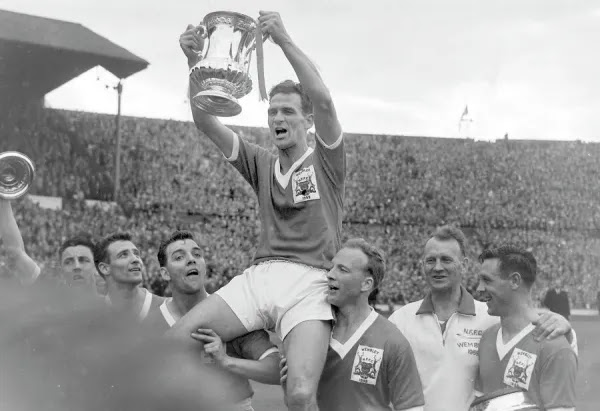
Whatever the truth is, City are currently the only mega club standing in the way of a possible winner that values the FA Cup beyond all else in their contemporary history.
who's why most of the clubs who departed saw a unique opportunity. The physical toll is one thing, however. Mentality is something else.
One senior executive at another quarter-finalist remarked on how City always reserves one of the top Wembley hotels at the start of the season. That is not perceived as arrogance. It is viewed as establishing a standard, an expectation that they will win.
Even in seasons like this, that can make a tremendous difference, and it's one of the reasons why teams like Hull City, Watford, and Southampton, as well as Palace and Brighton, have succumbed to wealthier clubs in the final stages in recent years.
You only need to look at Manchester United and Arsenal winning it in otherwise disappointing seasons. There is a cultural history that supports a belief. It's why Brighton has taken that approach to flags, and why officials have spent the week showing clips of late winners to their players. That belief is especially significant given their recent 7-0 loss to Forest. Of course, there is much more to the match than that.
It also explains why Bournemouth-City might define the cup season. Bournemouth has been one of the standout upwardly mobile clubs. City are the champions, yet they were among the first to disappoint.
If City win, there will be the impression that even a nominally democratic season concludes with the same old winners. If Bournemouth succeeds, we could be witnessing something extraordinary and possibly unique.
who's why most of the clubs who departed saw a unique opportunity. The physical toll is one thing, however. Mentality is something else.
One senior executive at another quarter-finalist remarked on how City always reserves one of the top Wembley hotels at the start of the season. That is not perceived as arrogance. It is viewed as establishing a standard, an expectation that they will win.
Even in seasons like this, that can make a tremendous difference, and it's one of the reasons why teams like Hull City, Watford, and Southampton, as well as Palace and Brighton, have succumbed to wealthier clubs in the final stages in recent years.
You only need to look at Manchester United and Arsenal winning it in otherwise disappointing seasons. There is a cultural history that supports a belief. It's why Brighton has taken that approach to flags, and why officials have spent the week showing clips of late winners to their players. That belief is especially significant given their recent 7-0 loss to Forest. Of course, there is much more to the match than that.
It also explains why Bournemouth-City might define the cup season. Bournemouth has been one of the standout upwardly mobile clubs. City are the champions, yet they were among the first to disappoint.
If City win, there will be the impression that even a nominally democratic season concludes with the same old winners. If Bournemouth succeeds, we could be witnessing something extraordinary and possibly unique.
Comments
Post a Comment