
Three crucial battles that might decide El Clasico.

On Saturday night, Real Madrid and Barcelona will face off at the Bernabeu in La Liga's first Clasico of the 2024/25 season.


Three points separate the two passionate rivals at the top of the Spanish standings, with Barcelona having a tiny advantage over Madrid heading into this match.

A Catalan victory would be a big statement as Hansi Flick attempts to win only his club's second La Liga title since 2019, with the chance to open up a six-point advantage over Los Blancos.

However, if Madrid wins the most points, they will move into first place, level on points with Barcelona but ahead on head-to-head tiebreakers.

This is perhaps the biggest single game in world football, and viewers from all over the world will be glued to their televisions when it kicks off in the Spanish capital.

Vinicius Junior versus Jules Kounde.


While he split a role with Jude Bellingham last season, Vinicius Junior is now Madrid's key man. The Brazilian has scored or assisted in nine of the club's 10 La Liga games this season, and he made his Champions League debut on Tuesday, destroying Borussia Dortmund with a hat trick.

Vinicius returned to his more normal left wing role against Dortmund, after playing in a front two with Kylian Mbappe in the previous four home and away games. However, Rodrygo's involvement forced the swap back to the left side, and he has since been ruled out due to injury, implying that Vinicius will resume his center position.

He will be free to go wherever he wants, but his heatmaps from recent games as a striker rather than a winger show him preferring gaps on the left. That will be an issue for Ballon d'Or hopeful Jules Kounde on Saturday night.

The Barcelona right-back played a fairly narrow position against Bayern Munich in the Champions League on Wednesday in an attempt to reduce space in the inner forward channels, where Vinicius is normally most threatening.

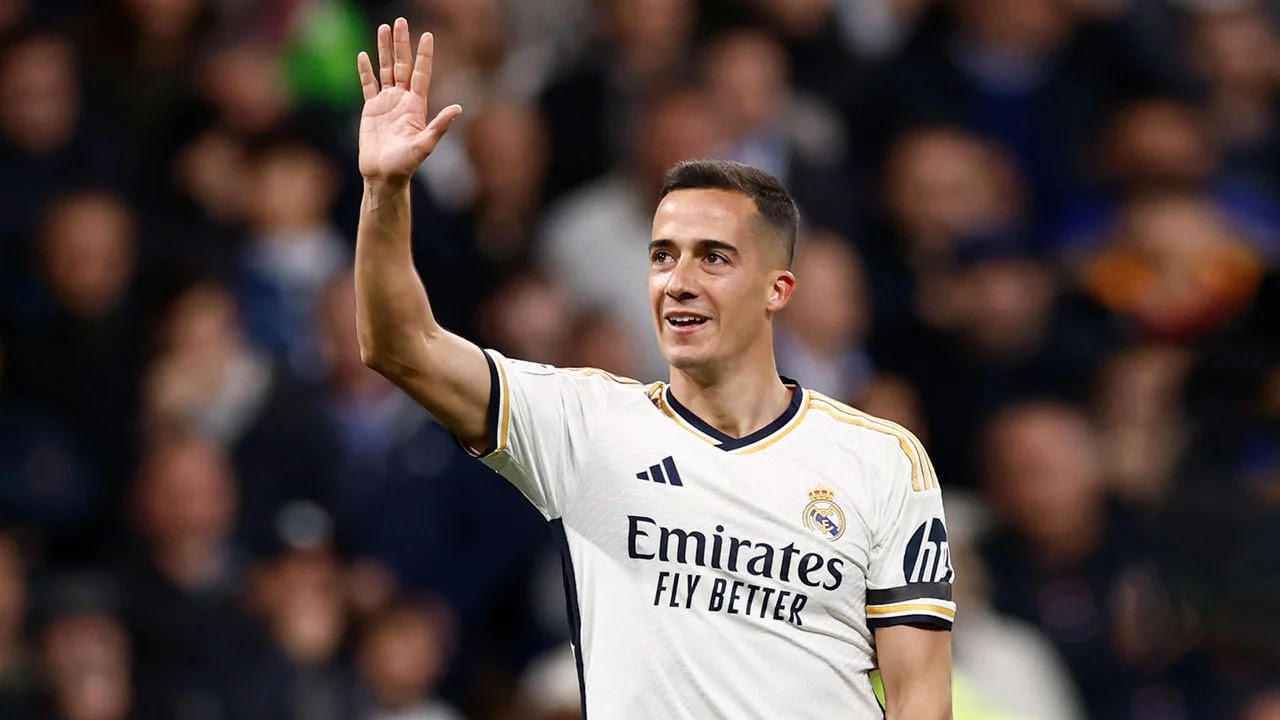
Raphinha versus Lucas Vazquez.

In midweek, another Brazilian winger scored three Champions League goals. Raphinha.

The former Leeds United player is thriving under Flick's supervision, despite speculation that he might be sacrificed for Euro 2024 hero Nico Williams over the summer.

Raphinha has been captaining the team in the absence of the squad's three other senior leaders, and he currently possesses football's most dangerous weapon: confidence.

Although he has four assists in his past two La Liga outings from a central position, it makes sense for him to play on the left wing at the Bernabeu, as he did against Bayern Munich. The reason for this is Madrid's right-back Lucas Vazquez.

The 33-year-old, who is also expected to wear Madrid's armband as the squad's most senior captain, has been repurposed as a full-back in recent seasons but is not a natural defender and may struggle against someone in such terrific form as Raphinha.

Jude Bellingham versus Pedri & Marc Casado.

Frenkie de Jong and Gavi have barely made a few replacement appearances between them due to long-term injuries, thus it seems excessive to put them back in the starting lineup for this match. De Jong learnt this the hard way, when 45 minutes in the previous Clasico in April set him back several months.

That implies Pedri and Marc Casado will most likely remain at the base of Barcelona's midfield. The pair, whose combined age (42) is only slightly higher than Luka Modric's (39), did a lot of hard work against Bayern, preventing the Bavarian giants from playing down the middle.


Despite being praised for their technical ability, they will need to use it against Jude Bellingham. He won two Classico's for Madrid last season. And, while it hasn't been a stellar start to 2024/25 for him by those lofty standards, the Englishman remains capable of altering a game in an instant.

Squeezing the space in locations where Bellingham prefers to function may frustrate him.

Comments

Popular posts from this blog

Didier Deschamps Departs: A Look Back at His Legendary 14-Year Reign with France.

Didier Deschamps walking away from the France job after 14 years feels less like a simple coaching change and more like the closing of a chapter in football history. His reign did not just bring trophies; it rewired the identity of Les Bleus, dragged the national team out of chaos, and turned France into the sport’s most reliable tournament machine. Looking back on his era means retracing a journey from crisis management to dynasty building, from the scars of past meltdowns to a culture defined by discipline, unity, and ruthless consistency. When Deschamps took charge in 2012, France were not the serene giant we now take for granted. The memory of the 2010 World Cup fiasco still hung in the air – the player revolt, the fractured dressing room, the sense that the blue shirt had become a magnet for ego clashes rather than collective ambition. There was talent, but it was scattered and unfocused. Deschamps arrived as a former captain who had already lifted the World Cup and the European C...

Arsenal's Tactical Reshuffle: How to Fill the Void Left by William Saliba's Injury.

Losing William Saliba doesn’t just remove a centre-back from Arsenal’s XI; it disrupts the entire tactical ecosystem Mikel Arteta has built around his pace, composure and dominance in duels. To fill that void, Arsenal can’t simply “plug in another defender” and hope for the best. They have to rethink their defensive structure, build new compensations in midfield, and rewire their build-up patterns so the system stays robust even without its most important individual defender. Saliba’s role under Arteta goes far beyond conventional defending. He is the anchor of Arsenal’s high line, the player who allows the team to compress the pitch without constantly worrying about balls in behind. His recovery speed buys time and space for an aggressive press, and his calmness on the ball gives the team confidence to play through pressure in the first phase. When he steps out of the line to confront a striker, the rest of the team can squeeze up, knowing he rarely gets rolled or beaten in open duels...

The Great Managerial Exodus: 16 National Team Coaches Depart Amid Tournament Turmoil.

The story of FIFA World Cup 2026 is not only about goals, upsets, and tactical battles. It is also about collapse at the top, where pressure became so intense that 16 national team coaches walked away, were dismissed, or simply could not survive the chaos of the tournament. That scale of turnover is remarkable even by football’s brutal standards, and it tells us something important: this was not just a tournament of bad results, but a tournament that exposed the limits of managerial control on the world’s biggest stage. When coaches begin falling one after another, the signal is larger than individual failure. It points to a competition where expectations are inflated, margins are microscopic, and the emotional cost of one defeat can become unbearable. At a World Cup, managers are judged not only on whether they win, but on whether they make a nation feel convinced, calm, and capable of resisting pressure. In 2026, that burden seemed to crush more coaches than usual. The result was a m...

Why Brazil's Campeonato Brasileiro Série A Operates Year-Round: A Deep Dive into Its Unique Structure.

Brazil’s Campeonato Brasileiro Série A doesn’t just “run long” — it sits at the core of a uniquely dense, almost year-round football ecosystem that blends national league play, state championships, and continental competitions into one continuous rhythm. Instead of the clean August–May arc familiar in Europe, Brazilian football lives on a calendar that feels more like a relay race: one competition handing the baton to the next with barely a pause. Understanding why Série A operates the way it does means unpacking geography, history, economics, and culture, and seeing how all of these forces combine to keep the country’s elite clubs in action for most of the year. At its simplest, Série A itself follows a straightforward double round-robin model: 20 clubs, home and away, 38 matches spread across roughly May to December. That structure would look familiar to any Premier League or La Liga fan. But in Brazil, that national league is only one chapter in a longer story. Before the Brasileirã...

Strategic Overhauls in the Bundesliga: How Rival Clubs Are Preparing to Challenge Bayern.

Clubs across the Bundesliga are entering a phase of strategic reinvention designed to wrest authority from Bayern Munich’s long-standing dominance. This is not a story of a single transfer window or a sudden managerial miracle; it is a multi-year reorientation in sporting philosophy, recruitment, infrastructure, and financial planning. Rival teams are increasingly realistic about where Bayern’s strengths lie — consistent talent acquisition, robust scouting, managerial continuity, and European experience — and are responding with holistic plans intended to close gaps gradually and sustainably rather than chasing fleeting headlines. The result is a league-wide churn of ideas: tactical experimentation, youth acceleration, data-driven scouting, and commercial innovation converging to create an environment where challenging the champion is a matter of design rather than hope. At the heart of these overhauls is a clearer alignment between sporting and business objectives. Previously, many Bu...