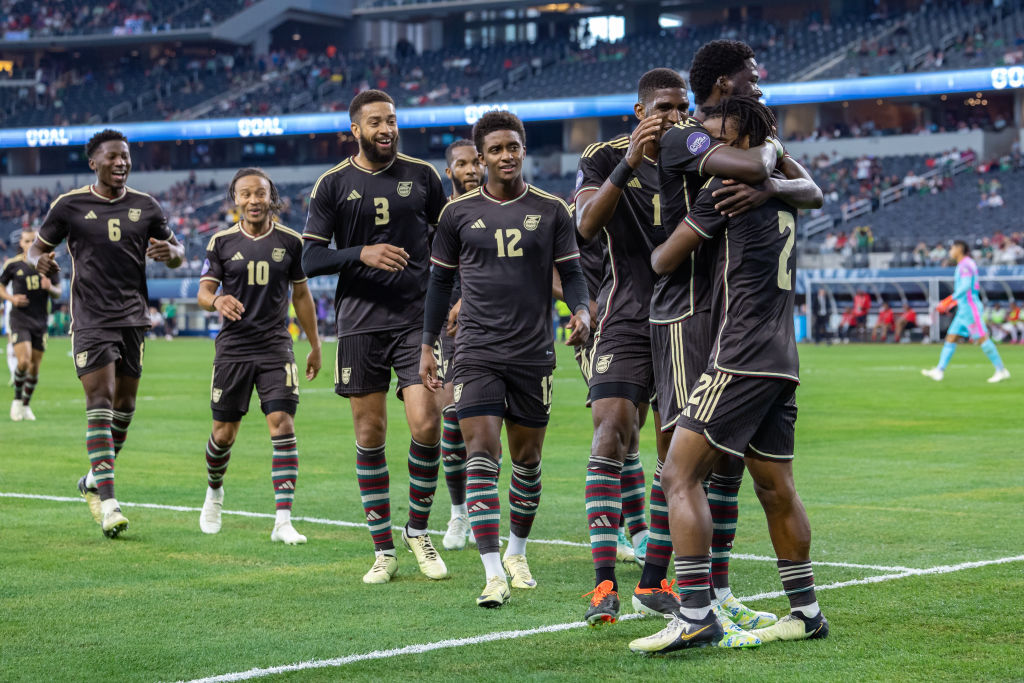
Jamaica aims for its first Copa America win against Ecuador.

Jamaica will face Ecuador on the second matchday of Group B at the 2024 CONMEBOL Copa America on Wednesday at Allegiant Stadium in Las Vegas, Nevada.

Last Saturday, the Reggae Boyz dropped their first encounter of the tournament, 1–0, to neighboring Concacaf nation Mexico in Houston. Goalkeeper Jahmali Waite was particularly impressive, making eight saves during the game.

Dexter Lembikisa had some of the greatest opportunities of the day against Mexico, including a last-ditch effort in second-half stoppage time. Despite the defeat, Michail Antonio and Kasey Palmer stood out on the offensive side.

Michael Hector made history by becoming the first Jamaican player to have made the most appearances in the competition. He can improve his record by playing against Ecuador.

Jamaica is still looking for their first goal, point, and victory in the Copa America after three appearances. A victory would keep the squad in contention for one of the top two slots, allowing them to make their maiden participation in the knockout stage.

Under head coach Heimir Hallgrimsson, Jamaica hopes to regain its winning ways in 2024. Jamaica has won three consecutive games prior to the loss to Mexico.

Ecuador's men's national team fell 2-1 to Venezuela on Saturday at Santa Clara, California. The team was reduced to ten men in the 22nd minute owing to a red card for Enner Valencia, who will serve his suspension.

Jeremy Sarmiento scored the first goal of the game in the 40th minute, despite having a man advantage, before Venezuela rallied in the second half. Sarmiento, 22, is a promising young player for La Tri.

Other 22-year-olds on head coach Felix Sanchez's call-up list include Moises Caicedo and Piero Hincapie. The Spanish manager led Qatar to the semifinals and quarterfinals of the Concacaf Gold Cup in 2021 and 2023, respectively.

Andres Micolta, who just helped Pachuca win the 2024 Concacaf Champions Cup, might make his debut in the competition. Ecuador also has another former CCC winner in Angel Mena, who was a member of Club Leon's championship team in 2023.

Comments

Popular posts from this blog

Didier Deschamps Departs: A Look Back at His Legendary 14-Year Reign with France.

Didier Deschamps walking away from the France job after 14 years feels less like a simple coaching change and more like the closing of a chapter in football history. His reign did not just bring trophies; it rewired the identity of Les Bleus, dragged the national team out of chaos, and turned France into the sport’s most reliable tournament machine. Looking back on his era means retracing a journey from crisis management to dynasty building, from the scars of past meltdowns to a culture defined by discipline, unity, and ruthless consistency. When Deschamps took charge in 2012, France were not the serene giant we now take for granted. The memory of the 2010 World Cup fiasco still hung in the air – the player revolt, the fractured dressing room, the sense that the blue shirt had become a magnet for ego clashes rather than collective ambition. There was talent, but it was scattered and unfocused. Deschamps arrived as a former captain who had already lifted the World Cup and the European C...

Arsenal's Tactical Reshuffle: How to Fill the Void Left by William Saliba's Injury.

Losing William Saliba doesn’t just remove a centre-back from Arsenal’s XI; it disrupts the entire tactical ecosystem Mikel Arteta has built around his pace, composure and dominance in duels. To fill that void, Arsenal can’t simply “plug in another defender” and hope for the best. They have to rethink their defensive structure, build new compensations in midfield, and rewire their build-up patterns so the system stays robust even without its most important individual defender. Saliba’s role under Arteta goes far beyond conventional defending. He is the anchor of Arsenal’s high line, the player who allows the team to compress the pitch without constantly worrying about balls in behind. His recovery speed buys time and space for an aggressive press, and his calmness on the ball gives the team confidence to play through pressure in the first phase. When he steps out of the line to confront a striker, the rest of the team can squeeze up, knowing he rarely gets rolled or beaten in open duels...

Why Brazil's Campeonato Brasileiro Série A Operates Year-Round: A Deep Dive into Its Unique Structure.

Brazil’s Campeonato Brasileiro Série A doesn’t just “run long” — it sits at the core of a uniquely dense, almost year-round football ecosystem that blends national league play, state championships, and continental competitions into one continuous rhythm. Instead of the clean August–May arc familiar in Europe, Brazilian football lives on a calendar that feels more like a relay race: one competition handing the baton to the next with barely a pause. Understanding why Série A operates the way it does means unpacking geography, history, economics, and culture, and seeing how all of these forces combine to keep the country’s elite clubs in action for most of the year. At its simplest, Série A itself follows a straightforward double round-robin model: 20 clubs, home and away, 38 matches spread across roughly May to December. That structure would look familiar to any Premier League or La Liga fan. But in Brazil, that national league is only one chapter in a longer story. Before the Brasileirã...

Why João Gomes is the Key to Unai Emery's High-Intensity Game Plan at Aston Villa.

João Gomes is the sort of midfielder that turns a good high-intensity system into a relentless one, and that is exactly why he can become central to Unai Emery’s game plan at Aston Villa. In a team built on intelligent pressing, rapid transitions, and controlled possession, he offers an uncommon blend of ferocity, discipline, and technical security. Plugging him into Emery’s structure doesn’t just add another body in midfield; it recalibrates the way Villa can press, protect space, and recycle the ball, making the whole system more stable at the back and more explosive going forward. Emery’s Aston Villa blueprint is rooted in order and aggression coexisting. His sides rarely press in a chaotic way; instead, they jump in specific moments, triggered by certain passes, body shapes, or zones. For that to work, he needs midfielders who read situations a fraction of a second faster than everyone else. João Gomes excels here. He anticipates passes into the pivot, steps in just as the opponent...

Post-Match Brawl: Analyzing the Chaos After Spain's Victory Over Argentina.

Spain’s victory over Argentina should have been remembered first as a tactical triumph and a historic final, but the post-match brawl quickly shifted the conversation from football to control, emotion, and discipline. What happened after the whistle was not just a “dust-up”; it was the visible collapse of tension that had been building through a high-stakes match, and it exposed how fragile the line is between competitive fire and outright disorder. The first thing to understand is that brawls after major finals rarely come from nowhere. They are usually the product of accumulated frustration, perceived disrespect, emotional fatigue, and the pressure of knowing that one result has just ended a dream. In this case, Spain had won a final that Argentina believed they could claim, and that alone creates a volatile emotional climate. When a game ends with disappointment for one side and ecstasy for the other, the body language in those first few seconds can matter as much as anything that h...